
When the icy wind of winter seeps into the streets, every passerby understands the importance of adequate protection against the biting cold. The puffer jacket, with its bulky appearance and unmatched comfort, stands out as an essential choice in the winter wardrobe. But what makes this piece of clothing so effective at resisting freezing temperatures? While some may settle for its popularity, others wonder about the hidden mechanisms behind its ability to keep the human body warm.
The insulating material: a barrier against the cold
The inner composition of the puffer jacket is its first line of defense against the cold. The materials used play a determining role in its effectiveness.
At the core of the thermal performance of the puffer jacket is the choice of insulation. Down, often sourced from duck or goose feathers, is prized for its exceptional ability to retain heat. Each feather forms a three-dimensional structure that traps air. This layer of air acts as a thermal shield, preventing the cold from penetrating and keeping body heat contained.
For those seeking alternatives to down, synthetic fibers present a viable solution. Although slightly less effective in terms of thermal insulation, they offer notable advantages such as moisture resistance. Synthetic fibers are designed to mimic the structure of down, thus providing effective protection against the cold while remaining lightweight.
The design: a balance between warmth and comfort
The way a puffer jacket is designed greatly influences its ability to retain heat. Every detail of its construction matters.
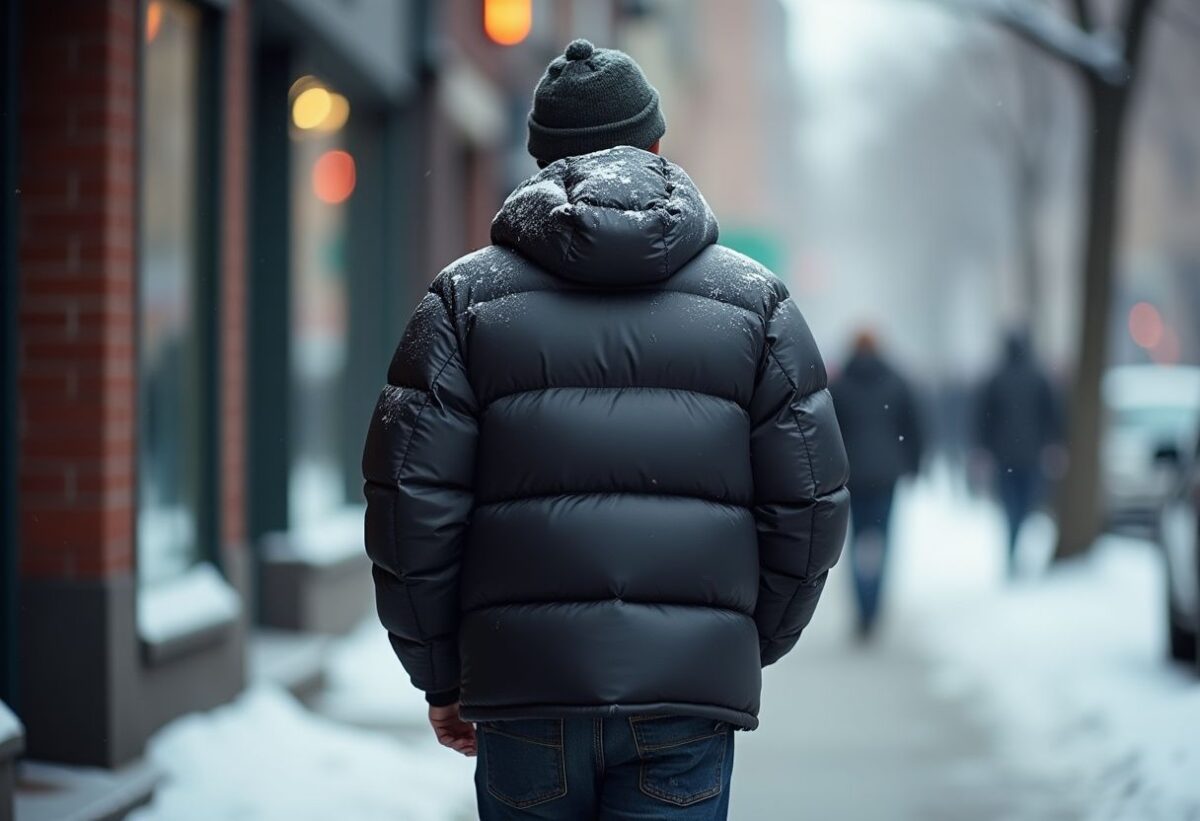
- The compartmentalized design: puffer jackets often feature compartments, or baffles, that prevent the insulation from shifting. This ensures an even distribution of warmth across the entire surface of the garment.
- The outer materials: the outer fabric must provide a barrier against wind and moisture. The materials used are often treated to be water-repellent, limiting water infiltration and thus preserving the thermal efficiency of the insulation.
- The finishes: zippers, cuffs, and hems play a significant role. A well-insulated zipper and fitted cuffs prevent wind from seeping in, while an adjustable hem limits heat loss.
Adaptation to extreme temperatures
The puffer jacket has evolved to meet the needs of adventurers and city dwellers, adapting to a variety of harsh climates.
To face extreme conditions, many puffer jackets incorporate advanced technologies. Some feature breathable membranes that allow body moisture to escape without compromising warmth. Others include reflective layers that bounce body heat back to the user, thus increasing thermal efficiency.
Those engaging in intense outdoor activities benefit from models designed for mountaineering or climbing. These puffer jackets offer an optimal combination of warmth without hindering movement. Furthermore, a women’s puffer jacket can also be designed with a specific cut to enhance warmth and comfort while providing an elegant and functional fit.
Maintenance: preserving warmth over time
Caring for your puffer jacket is essential to ensure its longevity and thermal effectiveness.
Washing should be done with care. Improper cleaning can damage the feathers or synthetic fibers, thereby reducing heat retention effectiveness. Using a gentle detergent and avoiding fabric softeners are recommended practices.
Drying is equally crucial. Ideally, drying at low temperatures with dryer balls helps restore volume to the insulation, thus maintaining its thermal capacity. Storage should be done in a dry, well-ventilated place, away from moisture that could deteriorate the insulation.
In the face of winter’s chill, the puffer jacket stands as an indispensable ally for those wishing to brave low temperatures without sacrificing comfort. Thanks to a judicious combination of insulating materials, thoughtful design, and advanced technology, it offers effective protection against climatic rigors. With proper maintenance, it remains efficient and retains its thermal qualities, making it a valuable investment to navigate even the harshest winters with ease.