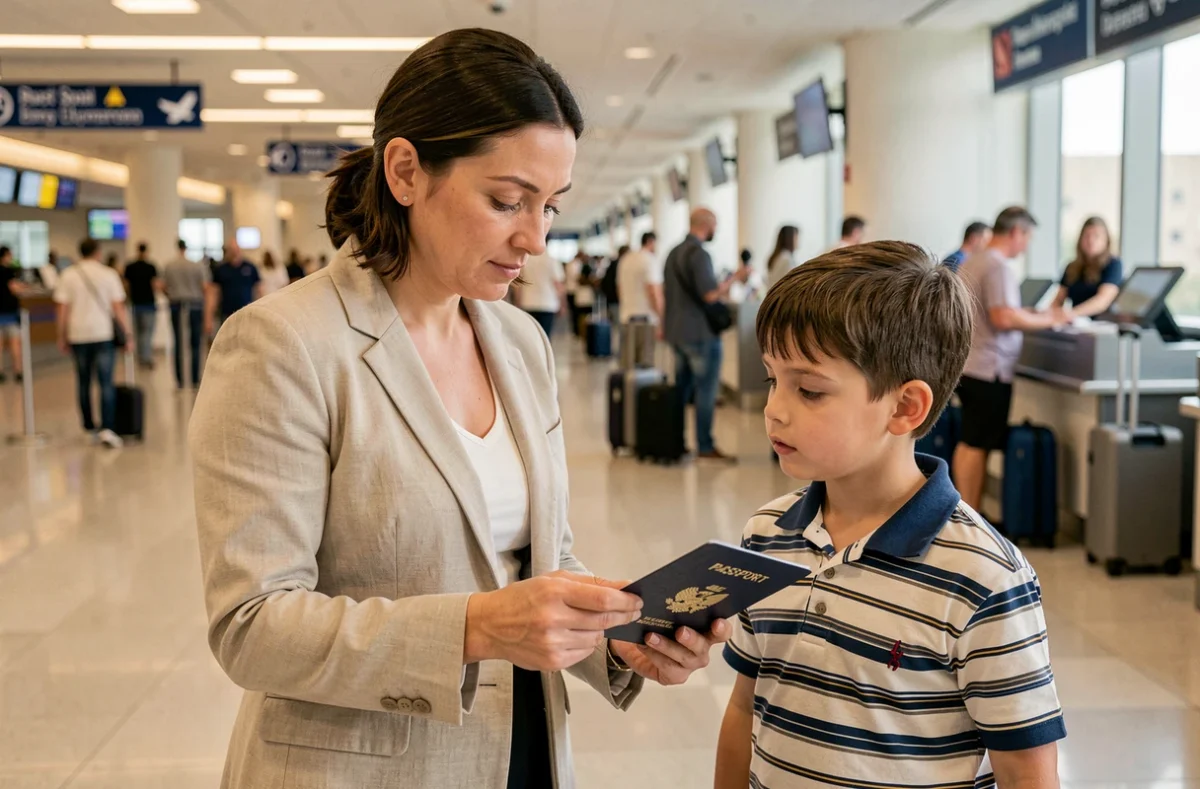
Every minor crossing a border must have their own identification documents. A forgotten document or an expired one is enough to block boarding, regardless of the child’s age.
Minor’s ID: national identity card or passport depending on the destination
The basic rule is simple: each child must have their own identification document, including an infant. The family record book does not replace an official identification document in any case.
For travel within metropolitan France, a valid national identity card is sufficient. This same card also allows travel throughout the European Union, as well as in some neighboring countries like Switzerland, Norway, Iceland, Andorra, or Monaco.
As soon as the destination is outside this area, a passport in the child’s name becomes mandatory. Some countries also require a visa, and the remaining validity of the passport may vary according to local legislation. It is essential to check these conditions country by country before booking, as a valid passport does not always mean a passport accepted at the border.
To find all the information on Concept Voyages regarding formalities by destination, the process allows for cross-referencing the specific requirements of each country with the profile of the minor traveler.

Authorization to leave the territory: when the Cerfa form becomes mandatory
The authorization to leave the territory (AST) is a document that applies only to minors leaving France unaccompanied by a holder of parental authority. In practice, if the child is traveling with at least one of their parents, the AST is not required, even when the parents are separated or divorced.
The AST becomes necessary when the child is traveling with a third party: grandparents, uncle, family friend, camp supervisor, school trip chaperone. The Cerfa form must then be completed and signed by a parent exercising parental authority.
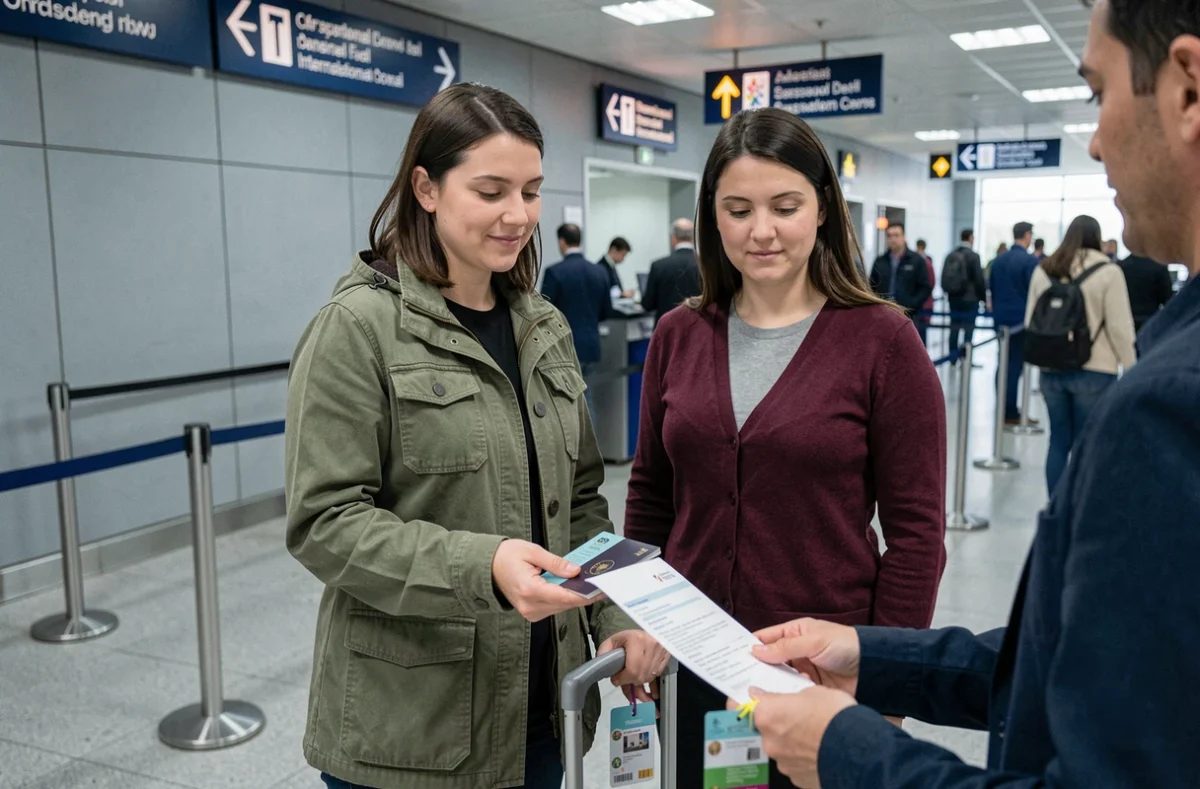
Three documents must be presented together at the control:
- The Cerfa form for authorization to leave the territory, signed by the parent.
- A photocopy of the identification document of the signing parent (identity card or passport).
- The child’s identification document (identity card for the EU, passport for other destinations).
Without this complete triptych, the child may be denied passage at the border. The Cerfa form can be downloaded for free from the Ministry of the Interior’s website and has no expiration date, but it must be consistent with the signing parent’s identification document, which must remain valid.
Foreign minor residing in France: the passport and DCEM combination
A foreign national child residing in France faces specific requirements, especially upon return. The document for the circulation of foreign minors (DCEM) facilitates readmission to French territory without a visa, but it does not work alone.
The DCEM must be presented with a passport or another valid travel document. One without the other is not sufficient. This rule, stated in articles L414-4 and L414-5 of the Code of Entry and Stay of Foreigners and the Right of Asylum, is often unknown to the families concerned.
The renewal of the DCEM must be anticipated: an expired document at the time of return can lead to significant administrative complications, even if the child usually resides in France.
Prohibition of leaving the territory and conflicts between separated parents
The prohibition of leaving the territory (IST) is a measure that prevents the issuance of an AST and alerts border control services.
The IST is distinct from the opposition to leaving the territory (OST), which is an emergency measure pronounced by the family court judge. In situations of conflictual separation, the parent wishing to travel abroad with the child must verify that neither of these measures has been registered.
If one parent refuses to sign the child’s passport or provide the necessary documents, the other parent can appeal to the family court judge. The procedure can be initiated urgently before a holiday period, but it requires a non-negotiable timeframe. Anticipating this process several weeks before departure remains the only reliable strategy.
EES and ETIAS system: what changes at European borders for children
The deployment of the European Entry/Exit System (EES) introduces new control modalities. According to available information, children under 12 years old would not be subject to fingerprinting. A photographic snapshot would still be required for younger children, while fingerprints would become mandatory from the age of 12.
The future ETIAS (European Travel Information and Authorization System) applies to nationals of visa-exempt third countries. Each child will need to have a separate application, even when traveling accompanied by their parents. This individual requirement per traveler follows the logic already applied to identification documents.
These two systems are likely to evolve before their final implementation. Verification on the official websites of the European Union or the destination country remains necessary before each departure.
The documentary preparation for a trip with a minor is not limited to the passport tucked in the bag. AST, DCEM, IST, EES, ETIAS: each family situation and each destination adds a layer of verification. The only reflex that protects against boarding refusal is to check each document for each child several weeks before departure.