On a a receiving dock at 6 a.m., a warehouse worker is doing squats to film pallets. His pants pull at the knees, and his jacket compresses his shoulders with every arm extension. This kind of discomfort, repeated hundreds of times per shift, turns a poorly designed garment into a factor of physical wear.
Retail chains that equip their teams in-house have every interest in treating workwear as a tool, not as a decorative uniform.
Cuts and reinforcements adapted to handling movements in retail
In the aisles or in the stockroom, you never stay in the same posture. The movements of stocking shelves require torso rotations, repeated squats, and lifting loads at varying heights. A work pant designed for these constraints includes stretch panels at the crotch and knees, which prevents fabric tension during deep bends.
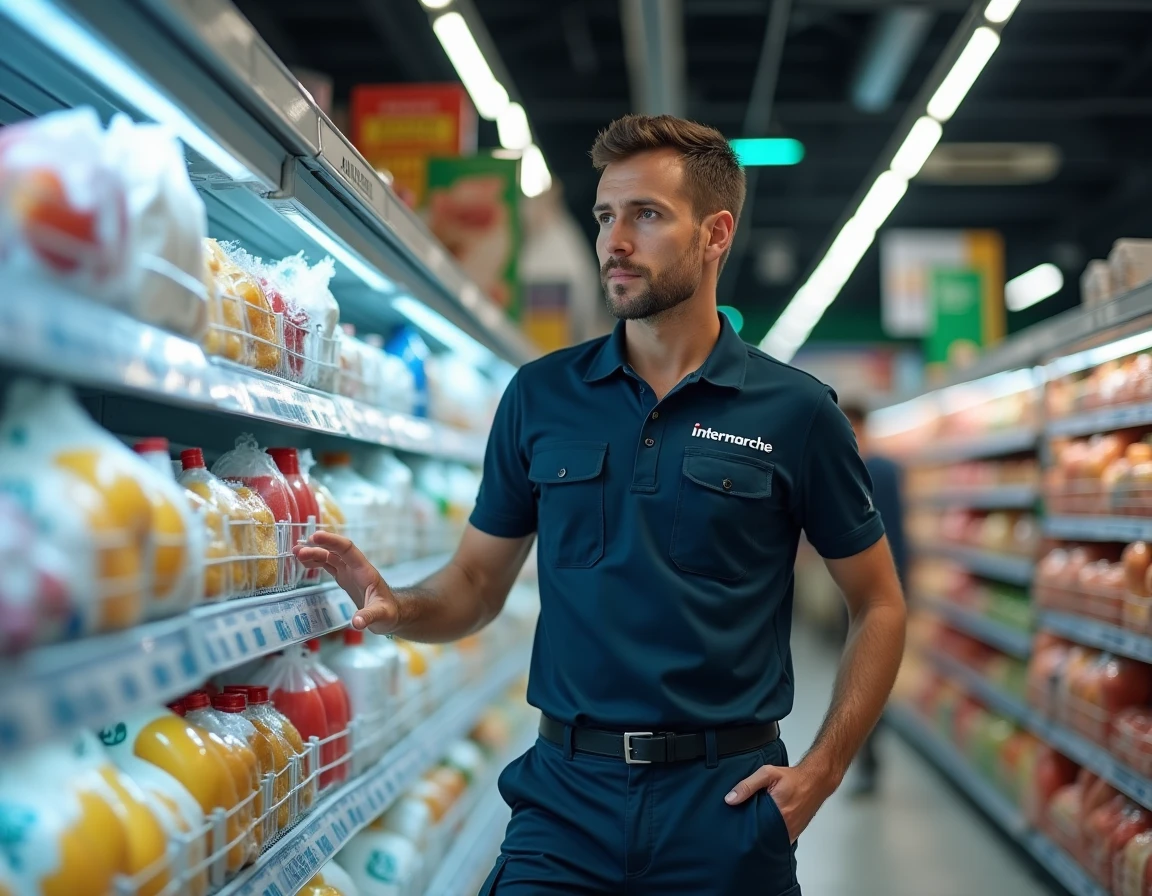
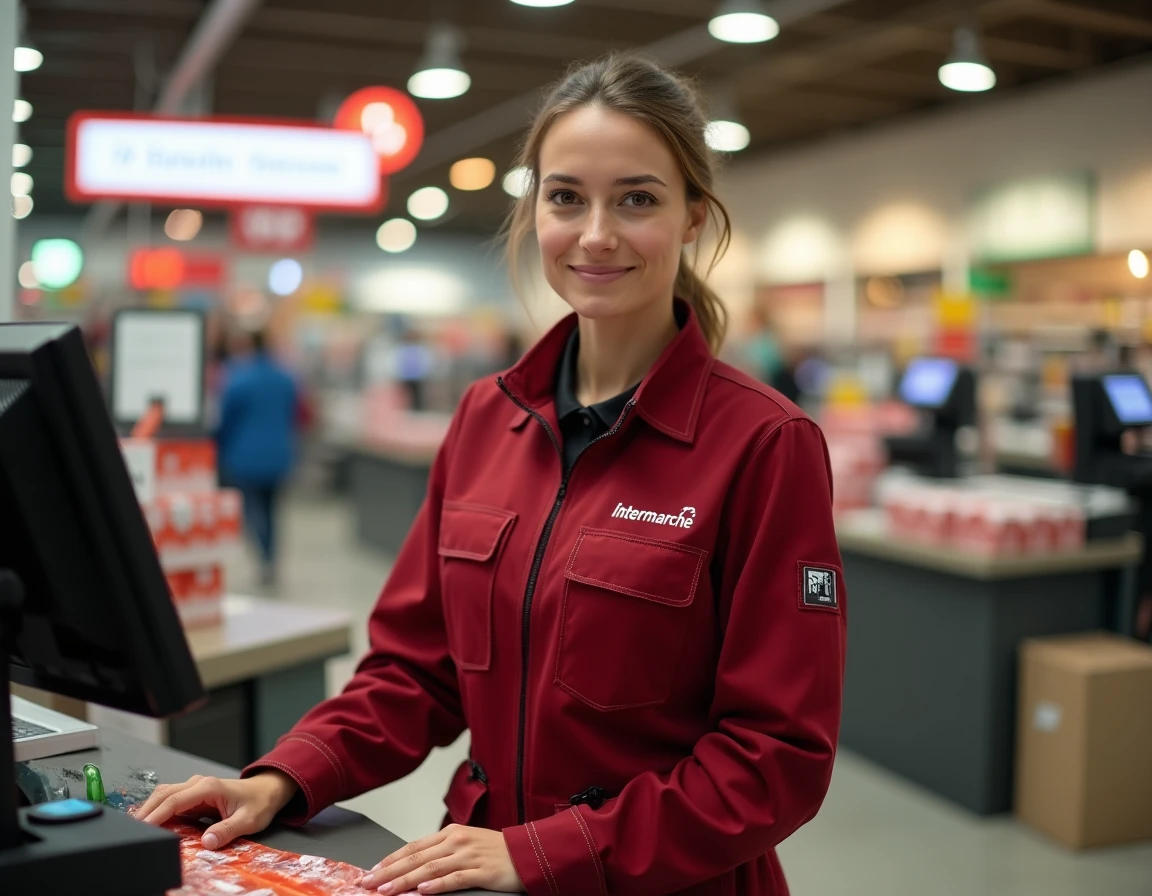
Jackets and polos follow the same logic. A classic straight cut restricts the shoulder when lifting a box overhead. Models with forward-set armholes or a longer back offer significantly greater freedom of movement. You can find this type of detail in Intermarché workwear on Blog Business, where the design is focused on the physical roles in retail.
The positioning of pockets also deserves attention. A patch pocket on the thigh, poorly secured, pulls down as soon as you slide in a cutter or a portable terminal. Side gusset pockets, positioned higher on the hip, distribute weight better and do not hinder walking. This detail may seem minor, but in a role where you walk several kilometers a day between the aisles, it changes the feeling at the end of the day.
Breathable fabrics for working in fresh produce and outdoors

Working in the fresh produce section at 4 °C in the morning, then unloading a truck in full sunlight in the afternoon: this is the daily routine for many versatile employees in large stores. The fabric of the clothing must manage these temperature swings without becoming an additional source of discomfort.
Cotton-polyester blends remain the standard for retail uniforms. Cotton provides breathability, while polyester offers durability and faster drying. Feedback varies on this point depending on the weights: a fabric that is too light wears out quickly against boxes, while a fabric that is too dense retains moisture in cold storage.
Heat management and recent recommendations
Recurring heatwaves have led the INRS and the Ministry of Labor to strengthen their recommendations on thermal risk prevention. In practice, this encourages retailers to favor lighter colors and cuts that promote natural ventilation for exposed positions. Technical fabrics with mesh zones under the arms or in the back are beginning to appear in summer-oriented professional ranges.
For cold storage positions, the opposite is sought: thin thermal underlayers that do not add bulk. The goal is to retain body heat without stiffening the silhouette, because an employee bundled up in three layers loses gestural precision and tires more quickly.
Intermarché workwear and QVCT approach in retail
Since the implementation of the 2021-2025 occupational health plan and the QVCT (quality of life and working conditions) approach, several retail chains have begun to integrate the ergonomics of uniforms into their TMS prevention efforts. The choice of clothing is no longer solely the responsibility of the purchasing department: employee representative bodies and HSE services are involved in the specifications.
At Intermarché, this logic translates into uniforms designed based on actual job roles. A cashier does not have the same needs as a butcher or a stockroom worker. Customization by profession allows for adaptation of:
- The fabric’s resistance to specific constraints (splashes in butchery, friction in logistics, cold storage passages)
- The cut and reinforcements according to the dominant movements of the position (bending, rotating, prolonged standing)
- The positioning of pockets and attachment systems according to the tools used daily
This profession-based approach is more expensive to design than a one-size-fits-all outfit, but it reduces complaints related to discomfort and premature wear of clothing. A pant tailored to the job lasts longer because it is not stressed in unreinforced areas.
Industrial maintenance and durability of professional attire
A work garment in retail goes through the washing machine several times a week, often at high temperatures for food hygiene reasons. Resistance to industrial washing is as crucial a criterion as initial comfort.
Double or triple stitching at stress points (crotch, armholes, pockets) is the minimum requirement. Plastic zippers withstand washing cycles better than metal ones, which tend to jam or rust. Heat-bonded reinforcements at the elbows and knees extend the lifespan by several months in physical roles.
What makes the difference after six months of use
A work garment is judged after two or three hundred washes, not when it comes out of the box. Outfits that retain their shape, color, and flexibility after this treatment are those that use mass-dyed threads rather than surface dyes. The fabric does not bleed, and most importantly, it does not stiffen over time.
Another often-overlooked point: internal labels that irritate after a few washes. Serious manufacturers now use thermal transfer marking directly on the fabric, which eliminates this common irritation at the neck or waist.
Choosing workwear for a brand like Intermarché means balancing between unit budget and actual long-term cost. An ergonomic and well-constructed outfit is replaced less often, generates less physical discomfort, and helps reduce absenteeism related to postural pain. Professional clothing is not a secondary expense: it is field equipment, just like a pallet truck or a cart.