The fabric weight determines everything else. Putting together a men’s guinguette outfit that actually works for an evening of dancing means thinking about fibres, cuts and layers—not just a retro colour palette.
Linen, cotton and blends: choosing the right fibre for dancing at a guinguette
Linen is the obvious choice for a summer guinguette outfit. It absorbs moisture better than cotton and dries much faster. The downside: it creases within the first hour of wear, which can look less than ideal as the evening goes on.
A linen-cotton blend is better suited to dancing. Cotton gives the fabric more structure, while linen keeps it breathable. Lightweight poplin shirts work well too, as long as the weave is airy.
Synthetic fibres (polyester, low-grade viscose) are best avoided. They trap heat, cause odours and have no place in a retro wardrobe. Choosing a men’s guinguette outfit made from natural materials also keeps the look true to its historical roots.
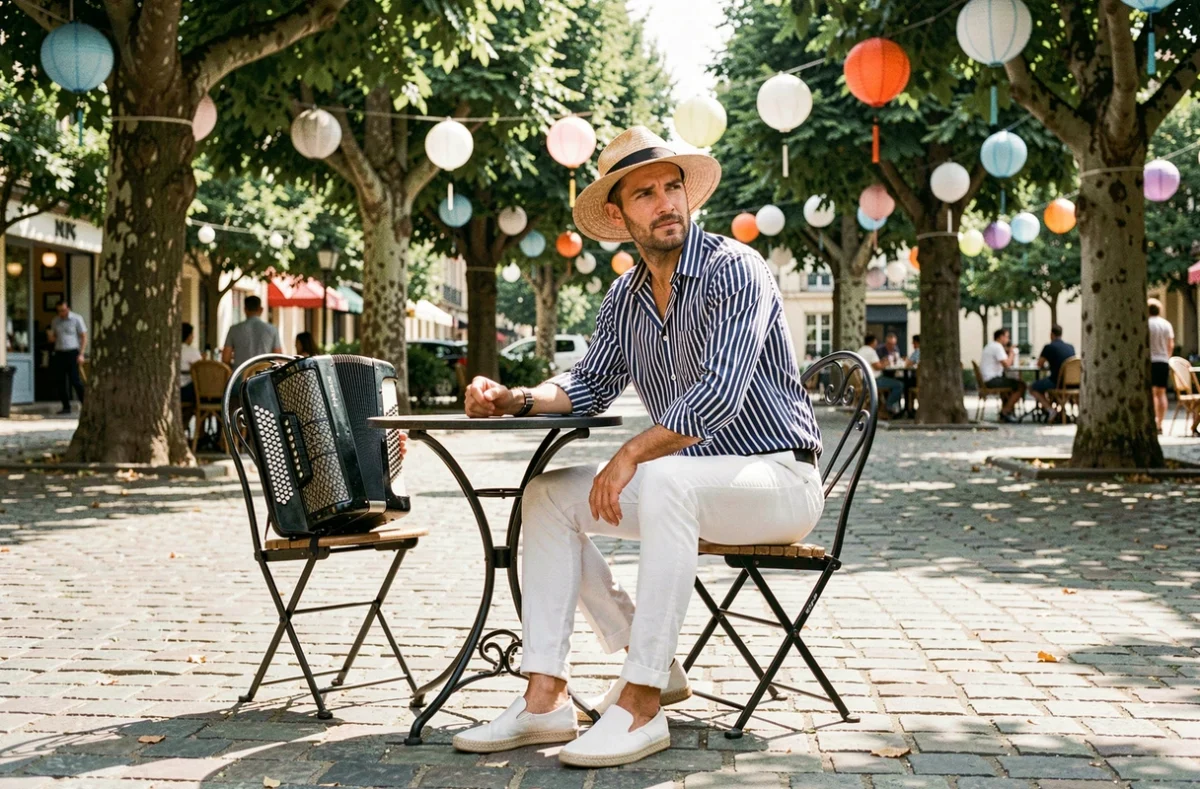
Shirt and trouser cuts: what changes when you’re dancing rather than posing
Most guides recommend a gingham or fine-striped shirt, light pleated trousers and braces. The choice of pieces is sound. The problem lies in the fit.
Shirt: collar and armhole
For an evening of dancing, an Italian collar or Cuban collar (camp collar) is a better choice than a button-down. Worn open, a Cuban collar allows much better airflow around the neck and chest. The armhole should be high enough to let you raise your arms without pulling the fabric, but not so tight that it restricts movement.
A shirt with the sleeves rolled up above the elbows frees up the forearms and creates a relaxed look that suits the guinguette spirit. Choose long sleeves that you can roll up rather than short sleeves for a more polished finish.
Trousers: pleats and waist
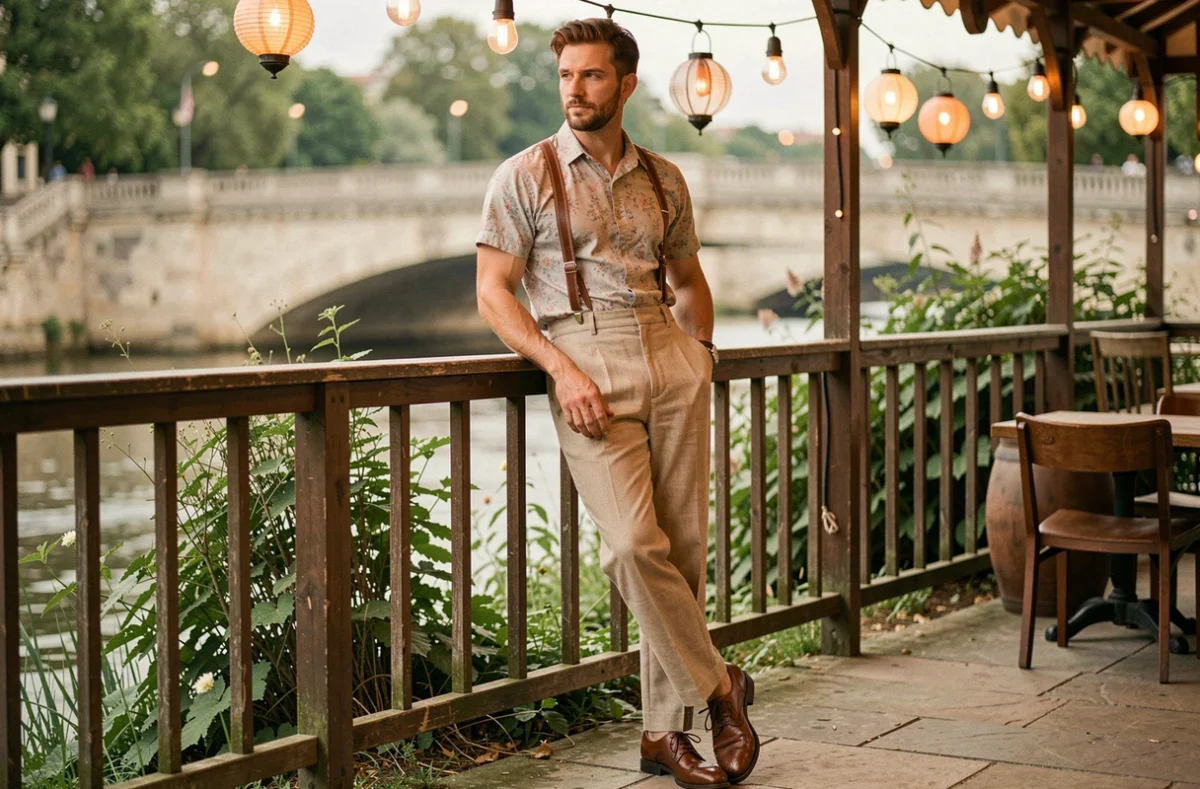
Single-pleat, mid-rise trousers in lightweight cotton or a linen blend are the most faithful to the look of post-war popular dance halls. The cut should be straight or slightly tapered, never slim. A pleat gives you more room through the seat and thighs, making a huge difference to comfort on the dance floor.
Flat-front chinos cut too close to the body restrict your knees when you move. They’re the most commonly misjudged piece in a men’s guinguette look.
Layering and the day-to-night transition: staying warm as the evening cools
Guinguette parties often start in the late afternoon, in the sunshine, and carry on long after sunset, by the water or beneath strings of lights. The evening chill sets in quickly, especially near the water.
The most elegant option in the retro style is a lightweight cotton or linen waistcoat worn without a jacket. It adds warmth around the torso without restricting your arms. A double-breasted waistcoat in a neutral shade (ecru, beige, light grey) works with both patterned and plain shirts.
- Lightweight cotton or linen waistcoat, worn open during the day and buttoned up in the evening to adapt to the falling temperature without changing outfits
- Lightweight canvas work jacket (like an overshirt) as an alternative to a waistcoat, provided it is unlined and soft through the shoulders
- Avoid structured blazers with shoulder pads: they’re too stiff for dancing and too formal for a guinguette atmosphere
A waistcoat without a jacket is the most recognisable silhouette in men’s guinguette style. It gives the look structure, defines the waist and lets you wear braces underneath for maximum effect.
Men’s guinguette accessories and shoes: the essentials that make all the difference
A natural straw boater is the signature accessory. It provides shade during the day and instantly sets a retro tone. A dark-coloured band (navy, black, burgundy) is the most versatile choice.
Elastic fabric braces, fastened with clips or buttons, replace a belt and reinforce the 1930s–1950s silhouette. We recommend Y-back braces rather than X-back braces: they’re more comfortable over time and more authentic.
- Boater or short-brimmed Panama hat, worn slightly back to keep the face clear
- Fabric braces (not thick leather, which is too warm) with fastenings that stay in place on your trousers
- Linen or cotton pocket square, tucked into the breast pocket of your shirt or waistcoat for a touch of colour
- Watch with a fabric or slim leather strap to match the retro style
Shoes: skip the patent leather
For an outdoor dance floor (often packed earth, a dance-hall floor or grass), lightweight derbies in soft leather or suede are the best choice. Espadrilles work for a very casual look, but offer little support for dancing for long periods.
Leather soles glide better than rubber soles on a dance-hall floor. It’s a detail that matters when you’re actually dancing, not just posing for a photo.
A men’s guinguette outfit ultimately comes down to three choices: the fabric fibre, the trouser cut and whether to wear a waistcoat or jacket. Each one directly affects your comfort over the course of an evening. Retro style is just the starting point; it’s the technical construction of the outfit that determines whether you’re still dancing at midnight or have been looking for a chair for the past two hours.