
Walking is an integral part of our daily lives, whether it’s to get to work, do the shopping, or simply take a stroll. Yet, many are unaware of how many kilometers they actually walk each day. Transforming these steps into measurable distance can provide a new perspective on our physical activity.
To convert your steps into distance, you just need to know the average length of your stride. Generally, an adult stride measures about 0.75 meters. By multiplying the number of recorded steps by this value, you will get a fairly accurate estimate of the distance covered daily. Mobile apps and pedometers can also make this calculation easier.
Methods to convert your steps into distance traveled
To assess the distance traveled from your steps, several approaches exist. The most straightforward is to use the average length of your stride. According to the National Institutes of Health, an adult stride measures about 0.75 meters. To effectively convert your steps into kilometers, multiply the number of steps by this length.
Tools like pedometers and mobile apps facilitate this conversion. These devices count your steps and use algorithms to estimate the distance traveled. For example, the WeWard app measures about 7000 steps per day on average for the French. Using the standard formula, you can convert 5000 steps into km, which is about 3.75 kilometers.
Your stride length can vary depending on your height and physical condition. For a more accurate estimate, measure your own stride: walk a known distance, count your steps, then divide the distance by the number of steps. This method provides a conversion that is more suited to your body type.
Studies show the positive impact of walking on health. The National Library of Medicine published a study in 2010 on the 10,000 steps per day, confirming the benefits for physical and mental health. The National Health Program issues specific recommendations based on age groups to optimize well-being through daily walking.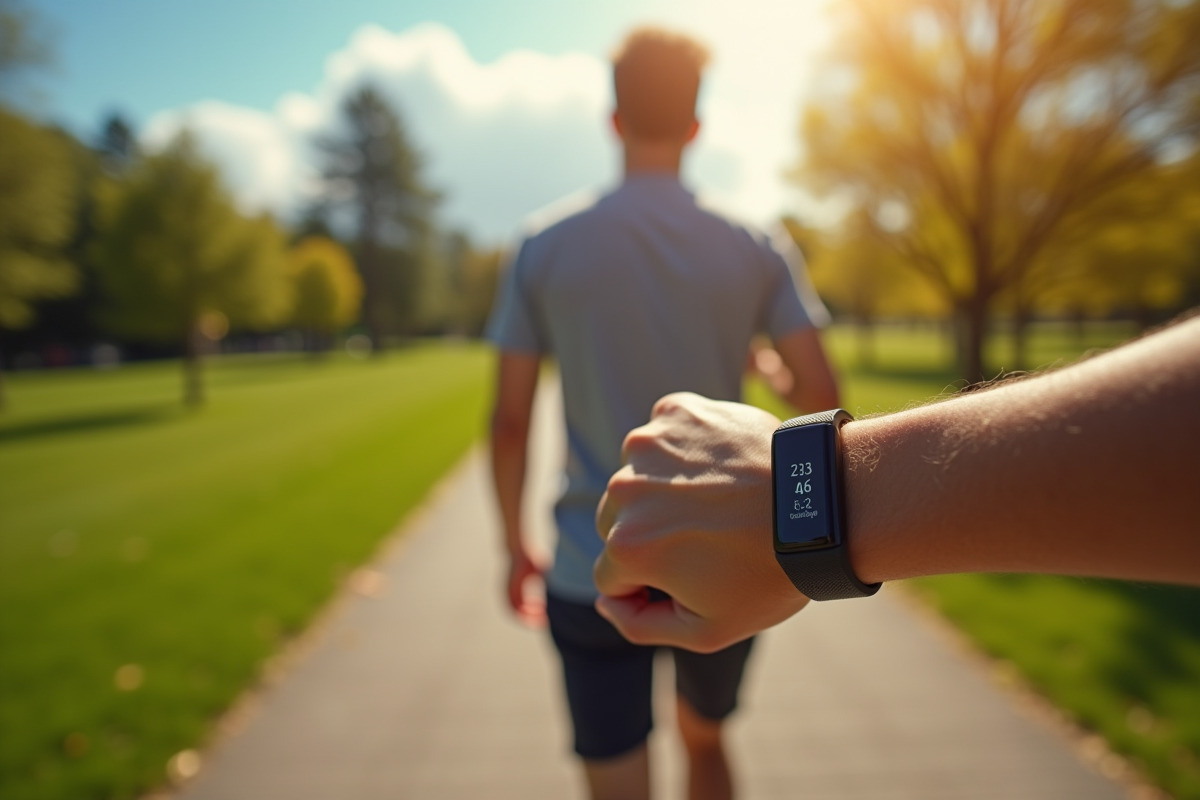
Tools and techniques to measure and optimize your daily walk
To effectively optimize and measure your daily walk, several tools and techniques are available. Pedometers remain an essential reference. For example, the Manpokei pedometer, of Japanese origin, is known for its accuracy and reliability. It counts the number of steps taken and thus allows you to convert them into distance traveled.
Mobile applications are also very useful. The WeWard app, for instance, measures an average of 7000 steps per day for the French. It not only allows you to track your steps but also to know the calories burned and the distance traveled. These apps offer intuitive interfaces and advanced features to track your daily physical activity.
Some tips to optimize your walking
- Use a fitness tracker: Devices like Fitbit or Garmin models provide continuous measurement of your activity, including the number of steps, distance traveled, and even your heart rate.
- Measure your stride length: Walk a known distance, count your steps, divide the distance by the number of steps to get an accurate estimate of your stride. Then adjust the settings on your pedometer or app for more reliable measurement.
- Set daily goals: Whether it’s 5000, 8000, or 10,000 steps, set targets based on your physical condition and track your progress.
Remember that walking is beneficial for physical and mental health. The National Health Program issues specific recommendations based on age groups to maximize the benefits of this activity. The study from the National Library of Medicine in 2010 confirms that walking 10,000 steps per day significantly improves overall well-being and health.