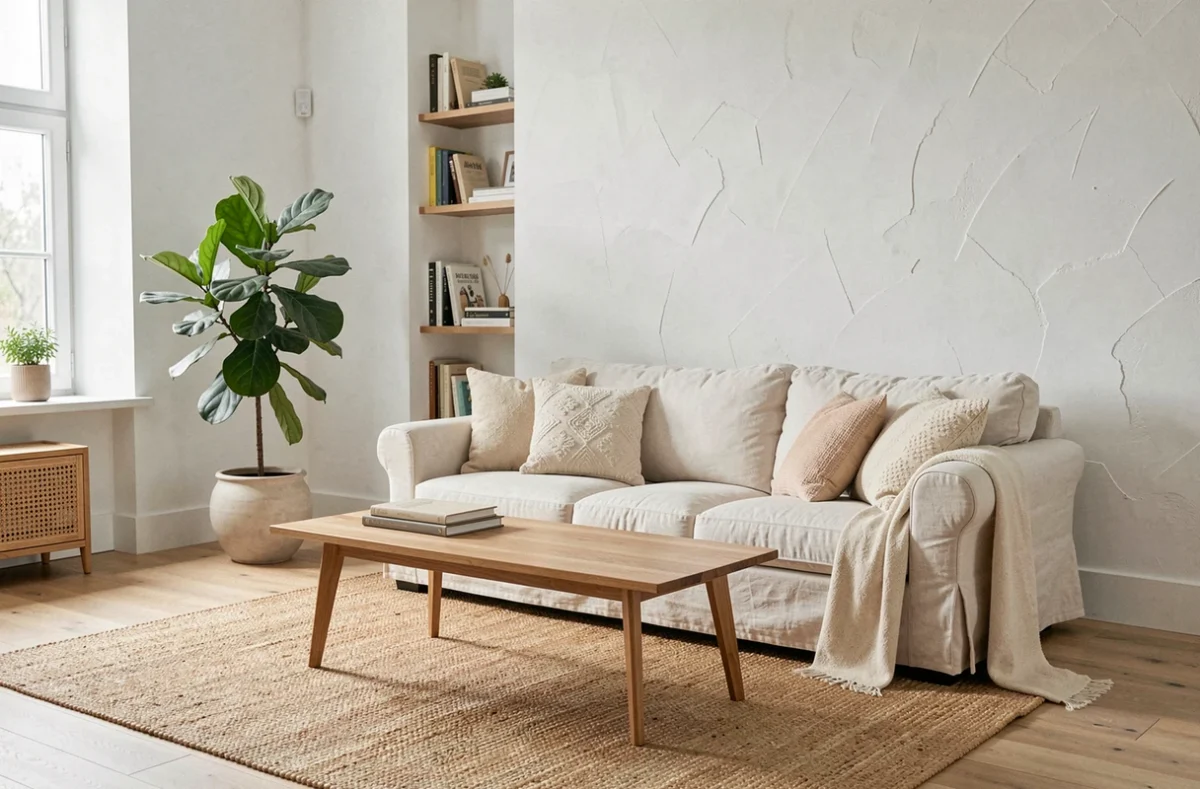
Between the color palettes that renew each season, the materials that come back to the forefront, and a European regulation that will reshape the furniture offering, the home universe is undergoing a period of profound changes. How do these different factors combine, and which decoration choices truly stand the test of ephemeral trends?
European Regulation on Ecodesign: What Changes for Decorative Furniture
Most decor-inspired articles overlook a major regulatory constraint. The European Regulation on the Ecodesign of Sustainable Products (ESPR), which came into effect in 2024, imposes sustainability, reparability, and recyclability requirements on almost all physical products sold in the European Union.
The first work plan for 2025-2030 classifies furniture and mattresses among the priority product groups. By 2028-2030, every piece of furniture marketed in the EU will need to be accompanied by a digital product passport (DPP) certifying its environmental profile.
For anyone interested in interior design, several online sections already compile practical sheets on these topics. Browsing the home section of Bozar, one can find guides that intersect decor inspirations with concrete purchasing constraints.
As long as the delegated acts are not published, there is currently no legally binding deadline or detailed list of mandatory data for the digital passport of furniture and interior textiles. However, manufacturers and distributors must now anticipate more traceability, more reparability, and less stock destruction.

Trendy Materials and Colors: Comparison of Wood, Stone, and Matte Finishes
Current decor trends converge towards raw materials and matte finishes. The table below summarizes the main trends observed in specialized sources for the period 2026-2027.
| Material / Finish | Associated Style | Preferred Indoor Use | Perceived Durability |
|---|---|---|---|
| Matte Dark Wood | Organic, wabi-sabi | Living room furniture, tables, shelves | High (repairable, recyclable) |
| Natural Stone (travertine, terrazzo) | Mediterranean, minimalist | Countertops, floors, wall decor | Very high |
| Matte Ceramic | Japandi, contemporary | Dinnerware, decorative objects, coverings | High |
| Boucle / Washed Linen | Cozy, Scandinavian | Sofas, cushions, curtains | Medium (textiles to maintain) |
| Patinated Metal (aged brass, wrought iron) | Soft industrial, vintage | Lighting, bases, handles | High |
What stands out clearly is that matte finishes dominate all categories. Glossy and lacquered surfaces are declining in favor of textured surfaces that absorb light rather than reflect it.
Earthy Colors and Neutral Tones
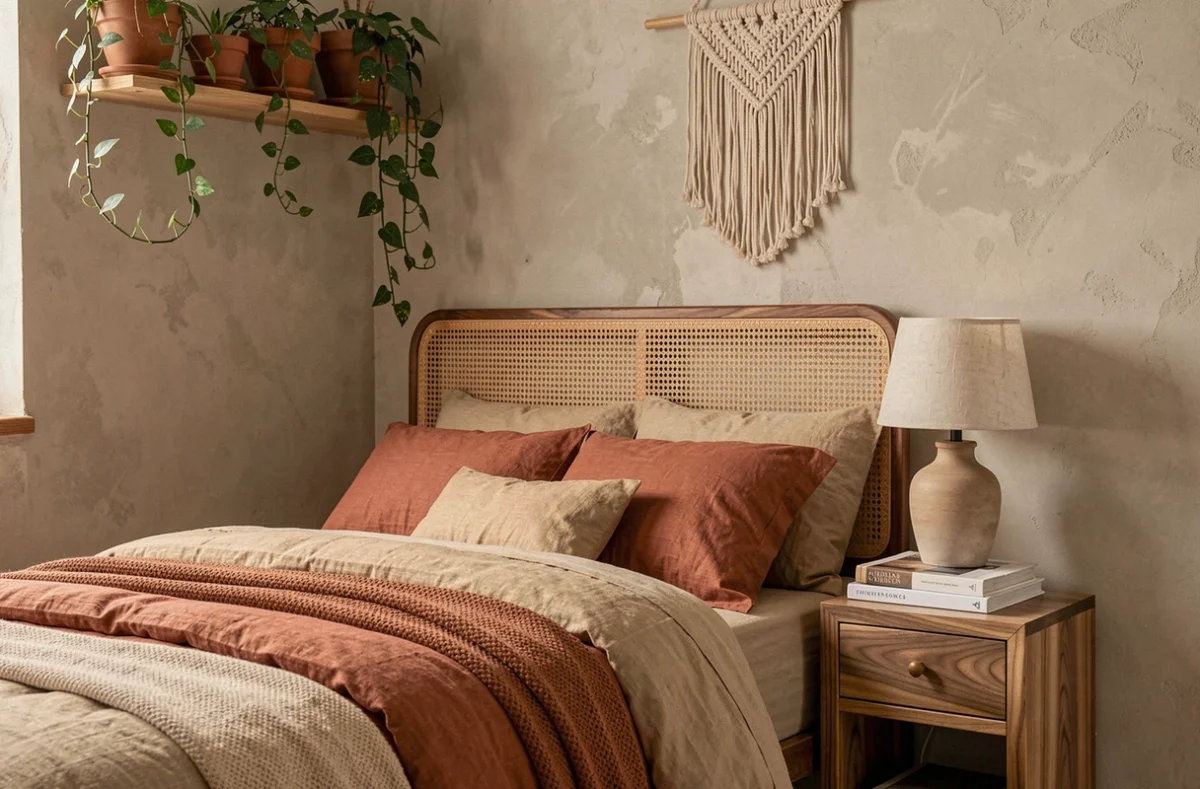
The palettes are anchored in earthy colors: terracotta, ochre, greige, off-white. Dark wood is making a strong comeback, often paired with light walls to avoid a cave-like effect. Saturated shades (Klein blue, emerald green) appear in occasional touches, on an armchair or a vase, rarely on entire surfaces.
Sustainable Interior Decoration: Purchasing Criteria That Resist Trends
Buying a piece of furniture or a decorative object solely based on aesthetics exposes one to two risks: a dated style in two seasons and a product that is impossible to repair. The European regulation on ecodesign pushes exactly in the opposite direction.
Here are the criteria that allow filtering a purchase of furniture or decorative accessories:
- Documented Reparability: Does the manufacturer provide spare parts, disassembly instructions, or commit to a duration of component availability?
- Material Traceability: Origin of the wood (FSC or PEFC label), source of the stone, exact composition of textiles. The future digital passport will make this information mandatory.
- Design Versatility: A piece of furniture with simple lines adapts to various interior styles over the years. Shapes too marked by a trend (extreme curves, very dated colors) age quickly.
- Finish and Maintenance: A matte solid wood material can be sanded and refinished. A damaged laminate needs to be completely replaced.
These criteria are not new, but the European regulatory framework is gradually transforming them into commercial obligations.
Decor Blog and Pinterest: Analyzing Sources of Inspiration Without Being Overwhelmed
Visual platforms (Pinterest, Instagram, specialized blogs) remain the first reflex for seeking layout ideas. Their limitation is well known: they show interiors photographed under adapted conditions, with lighting and framing that do not correspond to a real space.
Reading an Interior Photo with Perspective
A living room shot published on a decor blog or a Pinterest board almost always uses a wide-angle lens that visually enlarges the room. Colors are retouched to appear warmer or cooler depending on the desired style. The same room photographed with a smartphone often appears smaller and less bright.
Before reproducing an ambiance spotted online, two checks are essential: measure the actual available space and observe natural light at different times. A sumptuous terracotta wall in a southwest-facing photo can yield a stifling result in a north-facing room.
Cross-Referencing Inspirations with Technical Constraints
The most photographed trends are not necessarily the most suitable for all spaces. A terrazzo floor requires professional installation and a significant budget. A white boucle sofa with young children is a gamble.
Cross-referencing visual inspiration with the product’s technical data (composition, maintenance, exact dimensions) remains the best filter before any purchase. Detailed product sheets, when they exist, provide more useful information than a gallery of photos.
The home universe is now structured around two parallel axes: on one side, raw materials and neutral tones that are sustainably settling into interiors; on the other, a European regulatory framework that will compel manufacturers to prove the durability of what they sell. The most solid decoration choice is the one that takes both into account.