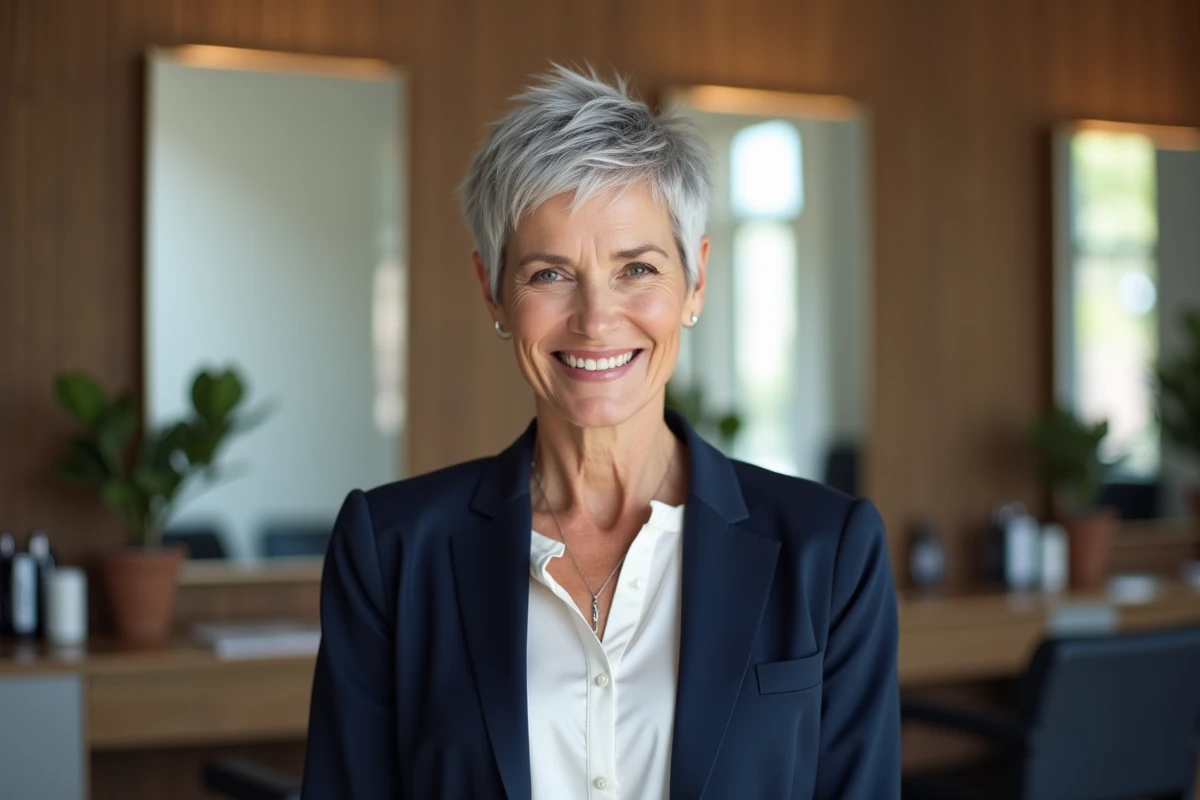
When wearing thick-framed glasses and hesitating between a very short pixie or a graduated bob, the result depends on how the cut interacts with the line of the temples and the top of the ears. It’s this type of concrete detail that makes the difference between a flattering short cut and a cut that hardens the face of a senior woman.
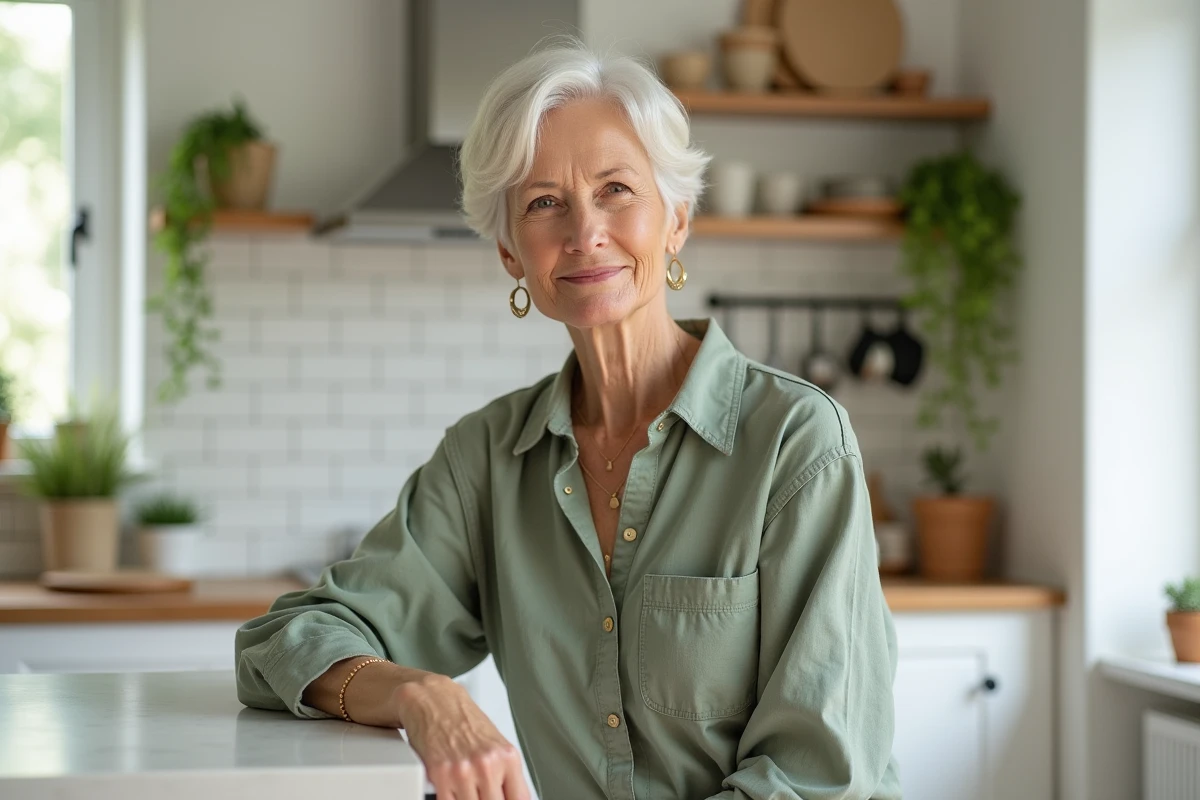
Embracing white hair and a short cut: the game-changing duo after 60
We have seen a clear shift in salons over the past few seasons: more and more women over 60 are asking to remove their dye to embrace their natural white with a textured short cut. Internal surveys from major professional hair brands confirm this trend.
The principle is simple. A very dark brown or high-contrast highlights create a harsh demarcation at the roots, drawing attention to forehead wrinkles and dark circles. Natural white or gray, combined with a soft pixie or a short bob, distributes light evenly and softens features.
Choosing to adopt a modern short cut for senior women on white hair does, however, require adapting the texture. Pure white tends to look flat if the cut lacks movement. Hairdressers recommend a light layering on top, with tapered strands that create volume without styling effort.
Styling time under ten minutes: the real deciding factor for a senior cut
Beauty content often discusses face shape, curtain bangs, and movement. However, the criterion that weighs most in the final decision at the salon remains the daily styling time.
Customer surveys conducted by salon franchises like Saint Algue and Jean Louis David between 2023 and 2024 show a significant increase in requests for cuts requiring less than ten minutes of preparation in the morning, among women over 55 who still work or travel regularly.
Easy-to-maintain short cuts for everyday
Not all short cuts are equal in terms of maintenance. A very structured pixie with long top and shaved sides may require precise blow-drying every morning. In contrast, some options only need a quick run-through with a dab of texturizing wax.
- The soft pixie with flexible strands: scrunch damp hair and let it air dry. The result lasts all day without touch-ups.
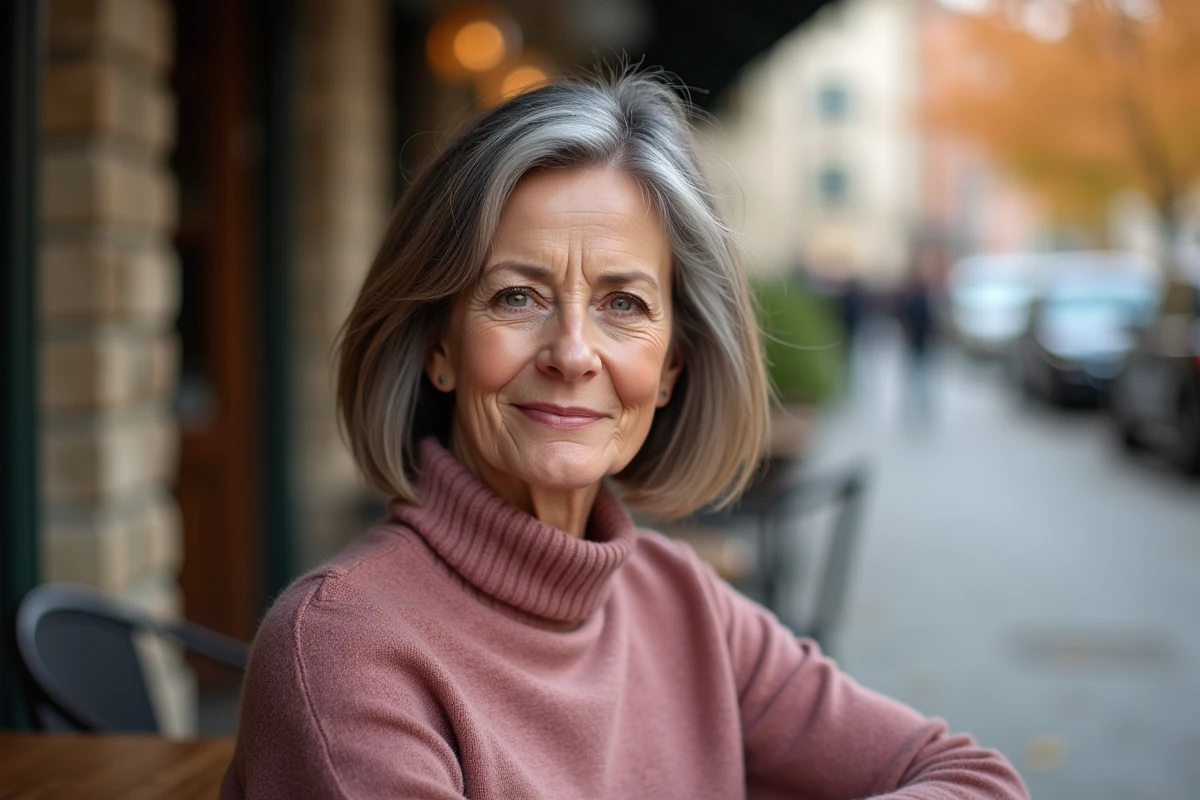
- The graduated short bob (chin-length or above): a quick upside-down drying is enough to create volume. No need for a straightener or curling iron.
- The textured boyish cut: the quickest of all, it styles in seconds with a bit of styling product.
Most hairdressers interviewed in the specialized press consider that ease of maintenance has become as crucial a criterion as the rejuvenating effect in the final choice.
Short cut and face shape: adapt the layering rather than the length
Classic advice associates round faces with mandatory length, or elongated faces with lateral volume. In practice, these associations are too schematic to guide a choice at the salon. It’s the placement of the layering that corrects proportions, not the overall length.
Round or square face: work on the top
On a wide face, a layering concentrated on the top of the head with volume at the crown visually elongates the oval. Keep the sides shorter and slicked back to avoid widening. An asymmetrical curtain bang, tapered and opened on one side, breaks the symmetry of the face and refines the features.
Oval or elongated face: lateral volume
We do the opposite. The layering is distributed on the sides to create width. Hairdressers then favor a short bob with movement at the cheekbones. A light straight fringe shortens the forehead and balances a long face.
Short cut for senior women and glasses: agreements to know
Glasses significantly alter the perception of a short cut. A thick, dark frame draws attention to the upper third of the face. If the cut is too short at the temples, the contrast accentuates hollows and can create a severe effect.
With thick frames, a pixie with enough length above the ears is preferred to soften the transition between the frame and the scalp. A few strands that graze the temple of the glasses create a natural continuity effect.
With thin or invisible frames, there is more freedom. A very short boyish cut works well, as there is no visual mass to balance at the temples.
- Cat-eye or angular frames: a rounded layering on the sides compensates for the angles of the frame.
- Round frames: a more structured cut with straight lines (neat short bob) avoids the “all-round” effect.
- Oversized frames: keep volume on top so that the cut doesn’t appear flattened by the size of the lenses.
Repeated heatwaves and short cuts: an underestimated practical factor
For the past few summers, heat has directly influenced cut choices. Several hairdressers interviewed by French lifestyle press (Madame Figaro, Version Femina) report an increase in requests for very short cuts in April-May, among women anticipating periods of high heat.
Thermal comfort has become an argument for going short, in addition to the aesthetic argument. For women who wore shoulder-length bobs, switching to a short bob or pixie represents a measurable gain in comfort during hot months, without sacrificing style.
Ultimately, the choice of a short cut after 60 relies on a balance between three concrete constraints: the natural texture of the hair (white, fine, thick), the time one is willing to dedicate each morning, and the accessories worn daily, glasses being paramount. Clarifying these three points to the hairdresser before choosing a style directs the cut much more effectively than a visual reference alone.