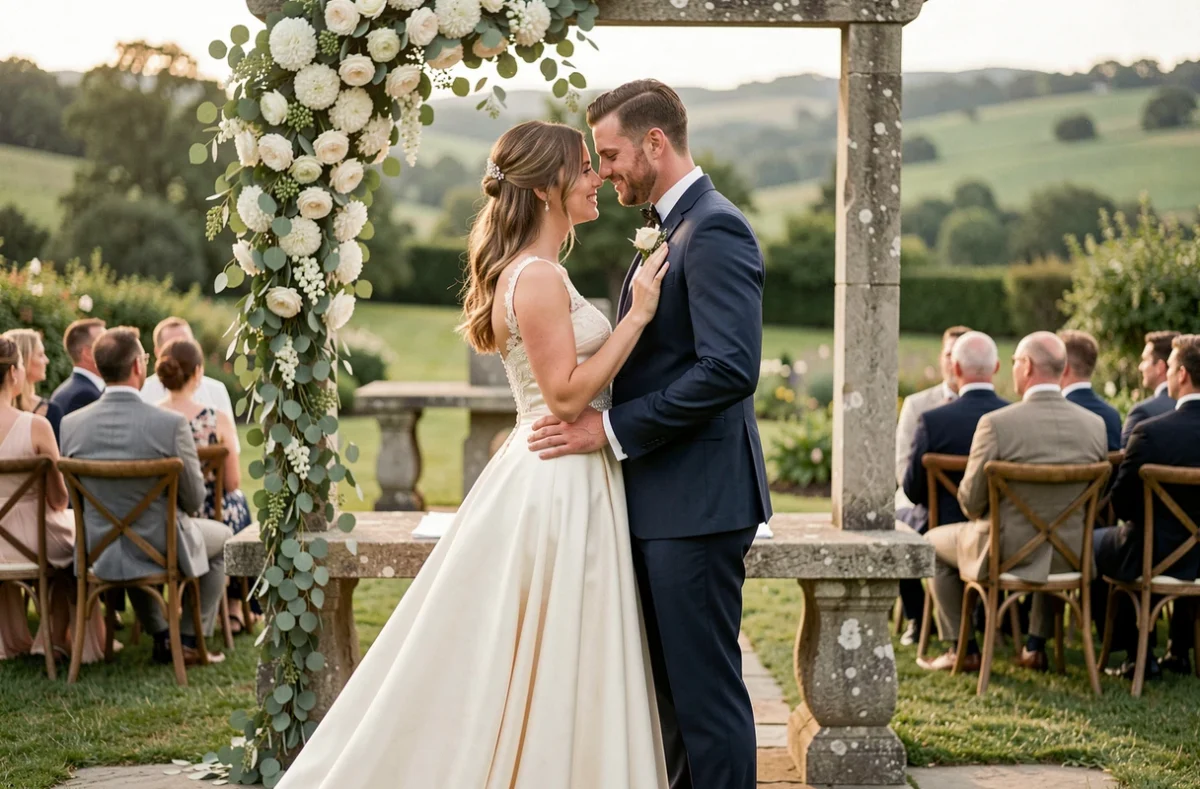
Video recording of weddings is increasingly prominent in contemporary celebrations. Couples no longer settle for just a photo album; they want to relive their entire day, from the preparations to the last dance. This trend raises practical questions, particularly regarding the legal framework for distribution, the technical constraints of filming, and the artistic choices that distinguish a successful wedding film from a simple amateur recording.
Image Rights and Online Distribution of a Wedding Film
Filming a wedding and publishing the video online are two legally distinct actions. A guest who agrees to be filmed during the ceremony has not necessarily given their consent for those images to circulate on social media or to be used for the promotion of a vendor.
This distinction between consent to recording and consent to distribution should be formalized in writing. The document must specify the relevant platforms (videographer’s website, YouTube channel, social media of the couple) and the intended duration of online availability.
For couples who wish to share their celebration publicly, it is possible to view the event video while keeping in mind that each identifiable face requires explicit consent from the person concerned.
Music poses a similar issue. Incorporating a protected track into a video montage distributed online does not fall under the purchase of the title or the venue’s sound licensing. Musical synchronization with images requires specific authorization, distinct from standard rights. A professional videographer typically uses royalty-free music libraries or negotiates synchronization licenses directly.
Drone Filming During a Ceremony: Regulations and Limitations
Aerial shots give wedding films a cinematic dimension that ground cameras cannot replicate. A flyover of a castle or estate in the countryside produces spectacular images, but the European regulatory framework strictly governs this practice.
The European drone regulation imposes specific restrictions regarding the overflight of gatherings of people. Depending on the drone category, location, and flight altitude, a declaration or prefectural authorization may be necessary. Proximity to an airfield, military zone, or protected natural area adds additional constraints.
- A professional pilot registered with the Directorate General of Civil Aviation checks restricted zones before each flight
- Direct overflight of guests during the cocktail hour or outdoor ceremony may be prohibited, even on private property
- A common solution is to film the estate and its surroundings before guests arrive, then edit these shots with ground footage
A drone cannot freely fly over guests on the pretext that it is a private event. The distinction between private space and airspace remains fundamental.
What Distinguishes an Exceptional Wedding Film from a Simple Recording
The majority of wedding videos available online follow a similar pattern: preparations filmed in fast motion, ceremony captured in a fixed shot, edited to emotional music. This format works, but it is not enough to create a film that the couple will want to watch again ten years later.
Narration and Editing Rhythm
A successful film tells a story. The videographer chooses a narrative thread, sometimes the vows spoken during the civil ceremony, sometimes a speech from a witness, and builds the editing around this narrative framework. The rhythm alternates between contemplative sequences and energetic moments to maintain attention throughout.
The most memorable sequences are not always the most spectacular. A glance exchanged during the entrance to the hall, a spontaneous burst of laughter during the cocktail hour, an improvised dance at the end of the evening: these candid moments form the raw material of an authentic narrative.
Lighting and Technical Choices
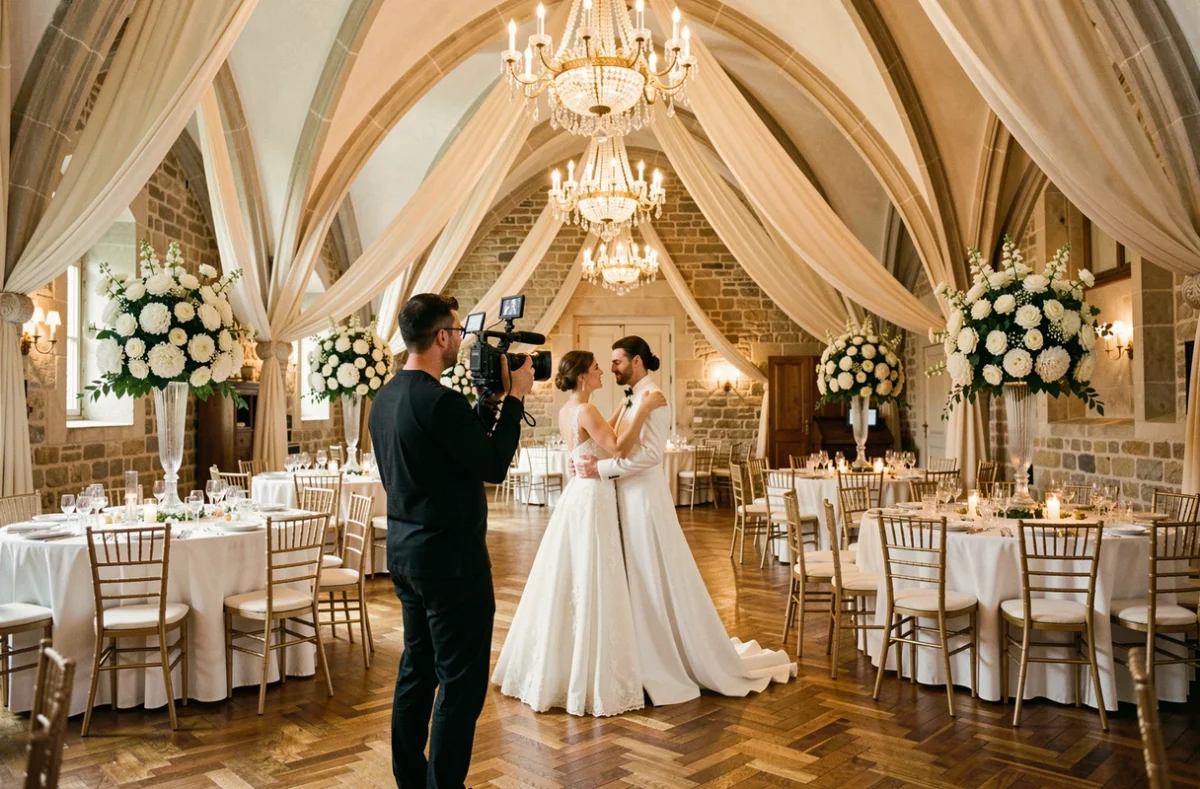
The reception venue largely determines the image quality. A castle with high windows and abundant natural light offers very different filming conditions than a basement reception hall. The videographer adapts their equipment accordingly: high-performance sensors in low light, discreet supplemental lighting, stabilizers for movement.
Scouting the location before the big day remains the best guarantee of a result that meets expectations. This scouting allows for identifying shooting angles, sources of natural light depending on the time of day, and acoustic constraints for sound capture.
Sharing on Social Media: What Couples Often Forget
Publishing a clip from one’s wedding on social media seems innocuous. The legal and practical reality is more nuanced.
Platforms aggressively compress video files. A film shot in high resolution loses a significant part of its visual quality once uploaded to certain networks. Professional videographers export specific versions tailored to the formats and codecs of each platform to limit this degradation.
- A vertical or square format is better suited for stories and reels than a cinematic 16:9 format
- The ideal duration of a shared clip rarely exceeds two minutes to maintain viewer attention
- Music rights differ depending on the distribution platform, a title authorized on one may be blocked on another
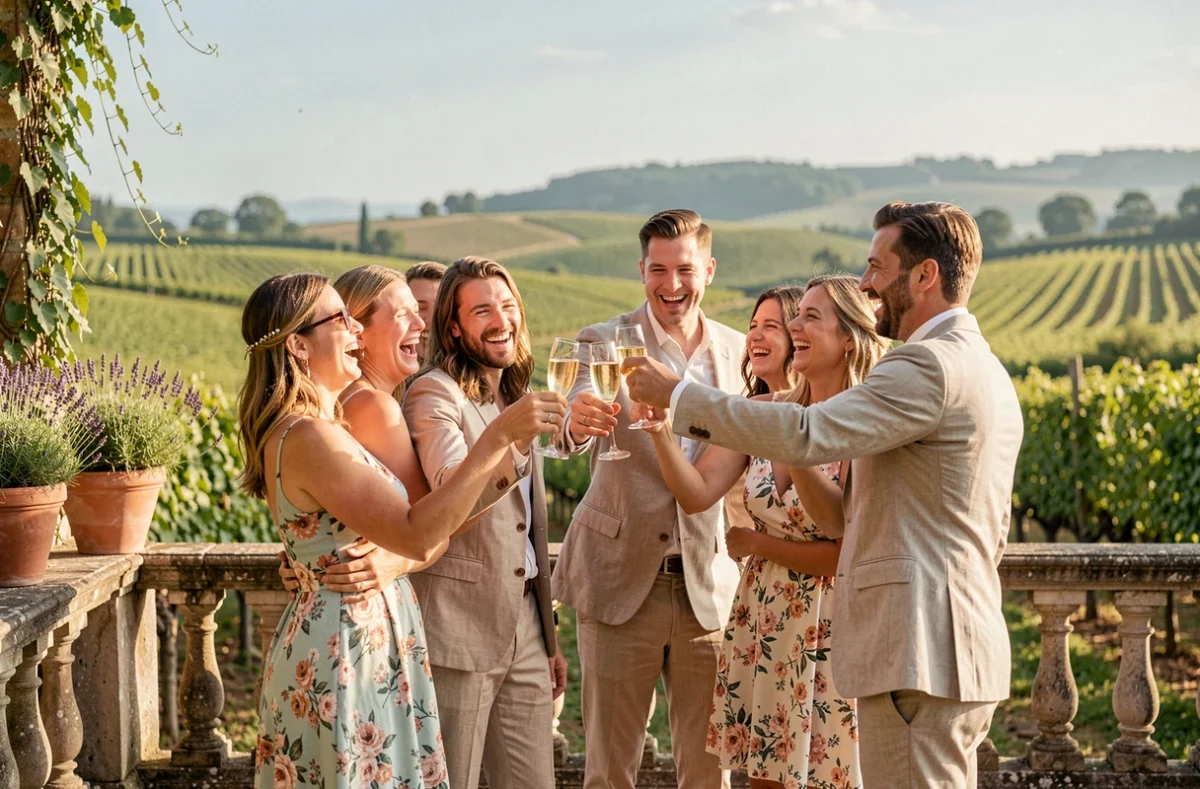
The choice of shared clips also deserves consideration. The sequences that work best are those that can be understood without context: a first dance, an exit from the church under petals, a fireworks display over the estate. Intimate moments, personal speeches, and tears of emotion often benefit from remaining within the family circle.
A wedding film is not meant to show everything to everyone. Couples who distinguish the complete version intended for their close circle from the short version shared publicly protect both their intimacy and the image rights of their guests. It is also this selection work that gives the film its lasting value.