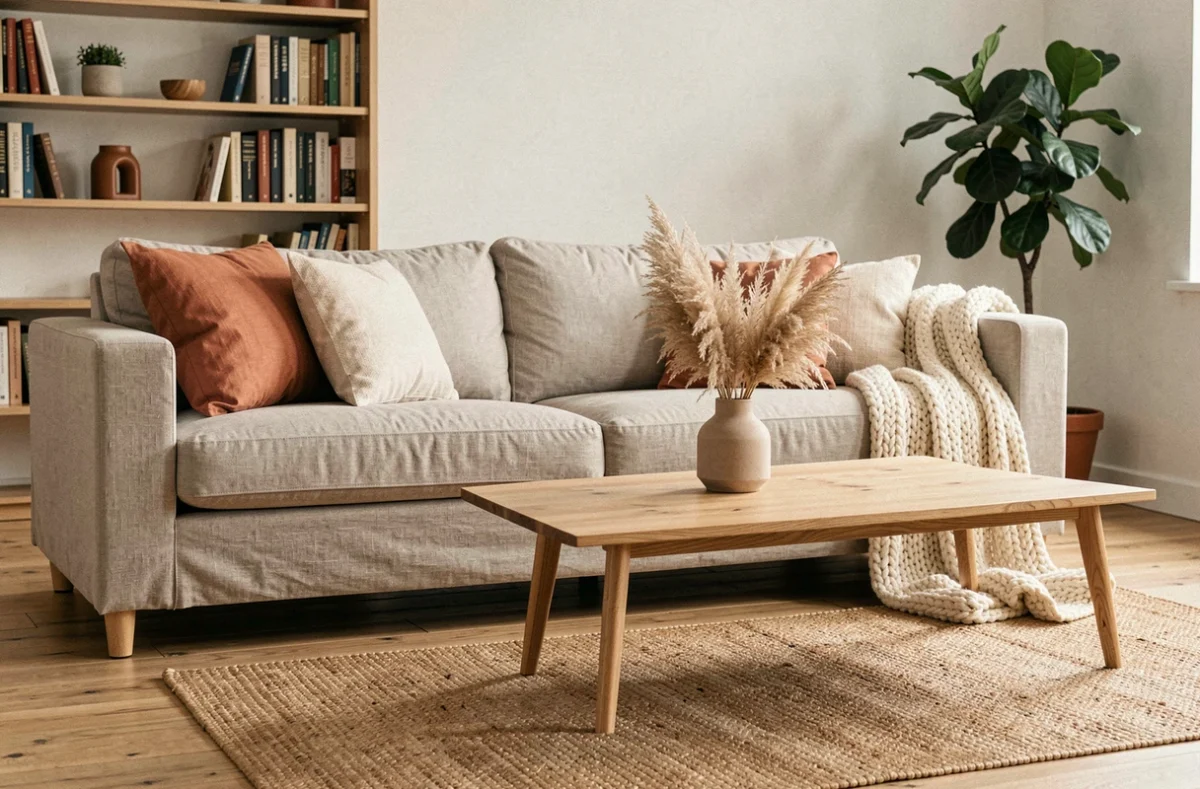
A warm room is not created by adding objects, but by working with the light, materials and arrangement of what is already there. Harmonious interior design relies on precise, practical choices—not on piling up cushions or scented candles.
Color temperature and lumens: two lighting parameters not to confuse
A bulb’s color temperature (measured in kelvins) describes its hue, from warm white to cool white. Lumens, on the other hand, measure the amount of light it emits. Confusing the two leads to common mistakes: a room may feel warm thanks to low-color-temperature bulbs yet still be too dark for reading or cooking.
The practical solution comes down to one principle: combine ambient lighting with focused task lighting in activity areas. A floor lamp aimed at the ceiling casts a soft glow around the living room, while an adjustable reading lamp provides the lumens needed by your reading chair. Adding more identical ambient light sources won’t solve the problem if none of them is directed at the task.
In an open-plan room, bulbs with very different color temperatures (one at 2700 K in the living area, another at 5000 K above the countertop) disrupt visual harmony. We recommend using a similar color temperature for light fixtures that are visible at the same time, and separating the controls by zone. A dimmer on the main circuit lets you lower the brightness in the evening without changing the bulb.
Always test the lighting from your usual seat: a light source aimed at your eyes causes glare that undermines any effort to create a cozy atmosphere, even with the right color temperature. More inspiration and advice on interior design can be found at https://murmuresdeco.fr, which regularly covers residential lighting topics.
Creating a warm look with what you have: reuse instead of decorative shopping
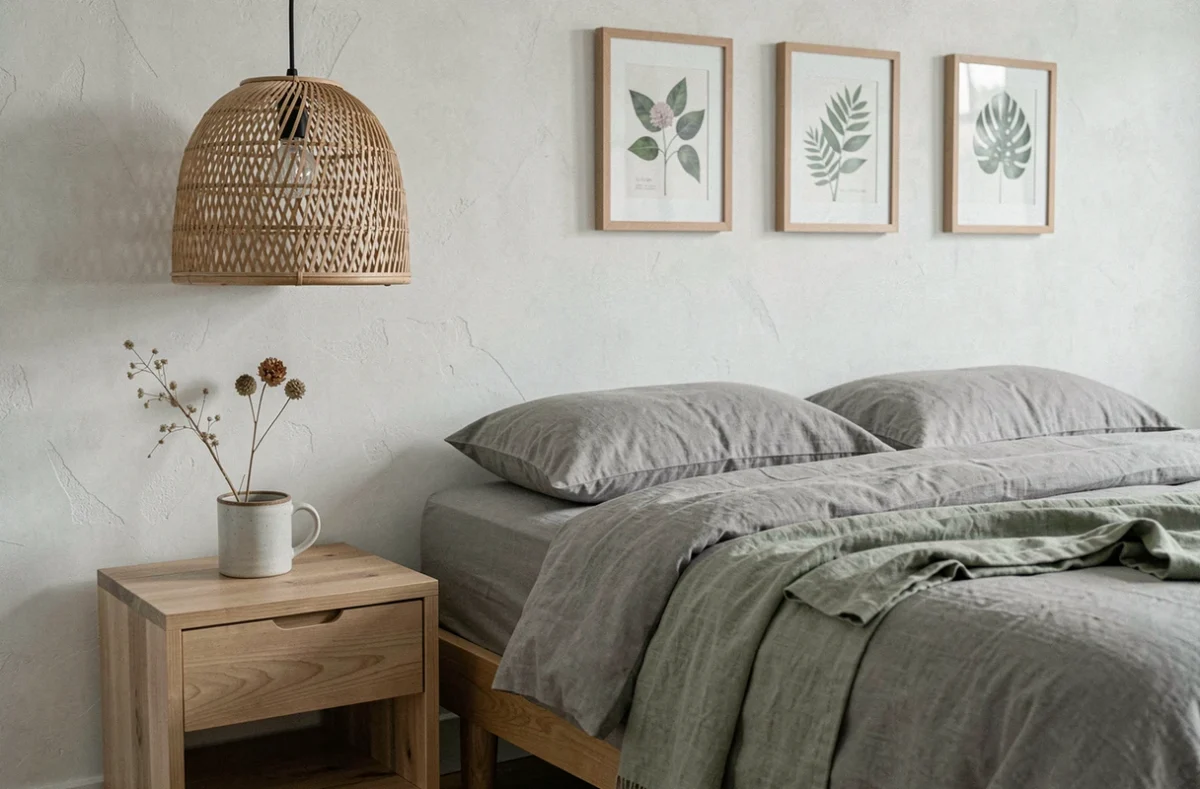
Before buying a new vase or another throw, take stock of what you already own. Reuse and upcycling refresh a room’s atmosphere without adding more volume. Repainting a photo frame in a warmer shade, turning existing fabric into a cushion cover, or moving a shelf from the hallway to the living room can all change how a space feels without cluttering it.
The difference between a useful change and an unnecessary decorative purchase comes down to a simple question: does this item replace something, or is it being added to what is already there? A light fixture that replaces a dated ceiling light transforms the atmosphere. A third candlestick placed on an already crowded console simply takes up space.
How to assess a decorative item before bringing it in
- Does the item serve a purpose beyond aesthetics (storage, lighting, seating)? A purely ornamental object should replace another one, not be added to the mix.
- Is its size in proportion to the furniture or wall it will occupy? A small frame on a large, empty wall creates a scattered look, not a cozy one.
- Does its material or color complement at least two other elements in the room? Harmony comes from subtle repetition, not maximum variety.
Buying secondhand also has a practical advantage: antique solid-wood furniture brings a texture and patina that new furniture made from laminated particleboard cannot replicate. This richness of material directly contributes to a sense of warmth.
Color palettes and textiles: limit the variables for a more cohesive look
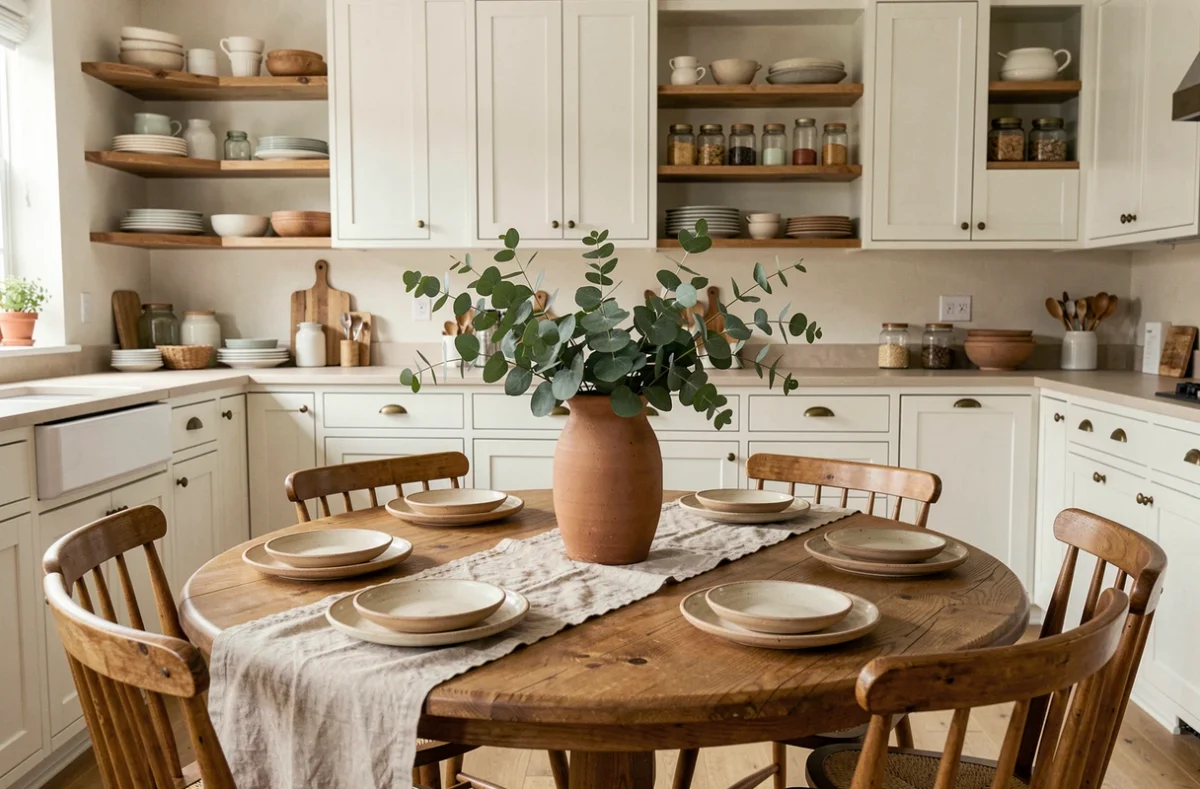
Three dominant colors are enough to create a harmonious room. Beyond that, the eye no longer knows where to rest, and the space feels busy rather than welcoming. Choose a base color (walls, floor), a color for the main furniture, and an accent color for textiles and accessories.
Textiles play an underestimated role. A bouclé sofa, a low-pile wool rug and linen curtains create three layers of texture that absorb sound and soften the light. The acoustic effect is real: textiles reduce sound reverberation, making a room feel noticeably more comfortable without changing the furniture layout.
Avoid perfect symmetry when arranging textiles. Two identical cushions on either side of the sofa, a throw folded to the millimeter—this overly precise styling takes away the spontaneity that makes a lived-in home feel warm.
Flow and empty space: clear surfaces contribute to the atmosphere
A common mistake is trying to furnish every corner. Empty spaces are not gaps that need filling. Clear floors and uncluttered storage surfaces let the eye move freely, making the room look larger and creating a calmer atmosphere.
Here’s a practical test: if you have to move something to set down a glass or a book, the surface is cluttered. Coffee tables, consoles and open shelves should have at least one-third of their surface clear to remain functional and visually light.
Things to watch out for to avoid clutter
- Group small decorative objects in threes or fewer on a tray or plinth instead of scattering them across the entire surface.
- Leave at least one wall without pictures or shelves in each main room. This empty space gives the eye a place to rest.
- Rotate displayed objects with the seasons instead of keeping everything out all the time. Putting items away temporarily refreshes the atmosphere without buying anything new.
A home’s warmth depends less on the number of objects than on how thoughtfully they are placed. A throw draped over an armrest, a single vase in front of a bare wall, a lamp well positioned beside an armchair: these three elements, carefully chosen and precisely placed, do more than a room full of well-intentioned decor.