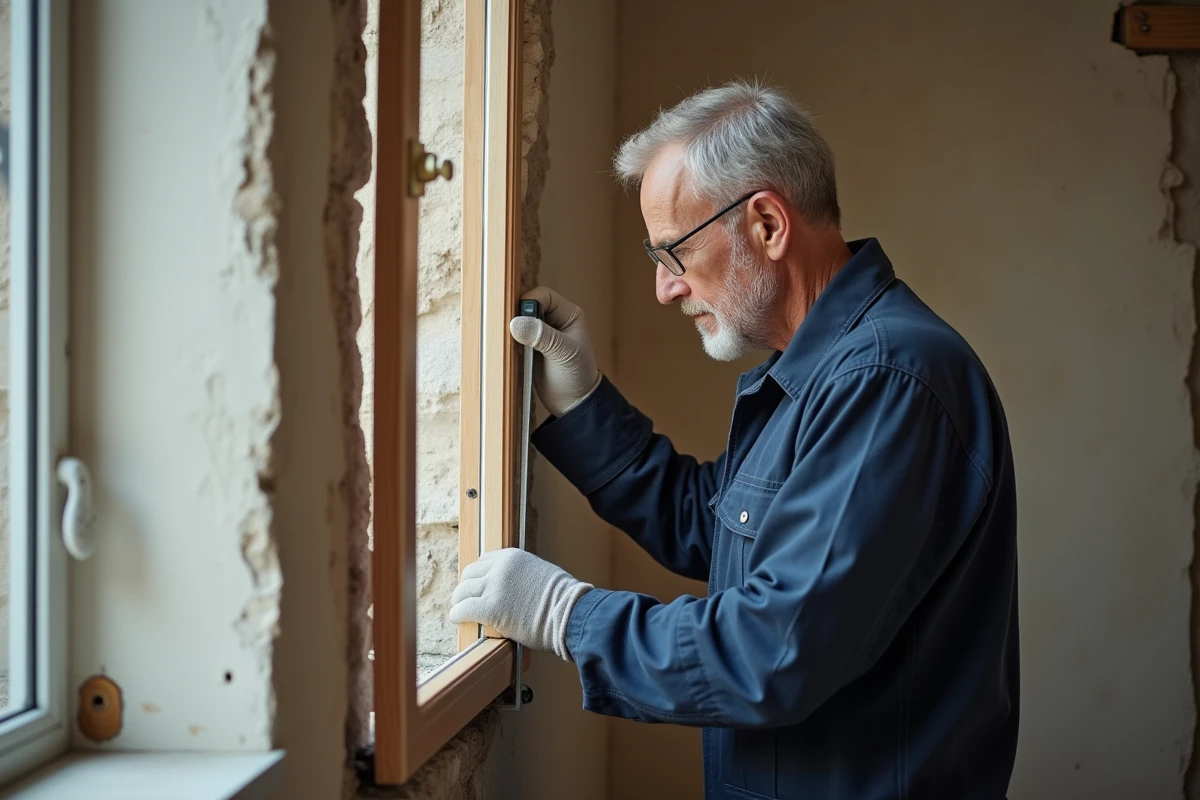
Replacing windows without altering the exterior appearance does not trigger any urban planning formalities. As soon as the material, color, dimensions, or type of opening changes, a prior declaration of works becomes mandatory. Confusing routine maintenance with facade modification remains the primary cause of disputes between individuals and regulatory services.
Prescription and notarial blockage: the real risk of unreported window changes
The competing articles detail the cases where authorization is required but overlook the most concrete consequence of an infraction: blockage during a real estate transaction. A notary who notices unreported work on the facade may require regularization before signing the authentic deed.
The statute of limitations for criminal infractions of the urban planning code runs for six years from the completion of the work. The civil statute of limitations extends to ten years. During this period, the town hall or a third party (neighbor, co-owner) can initiate demolition or restoration actions.
We recommend keeping the receipt of the prior declaration and the non-opposition order in the technical diagnostic file of the property. Finding all the information related to the authorization and formalities for changing windows allows for anticipating these notarial verifications.

Prior declaration of works: content of the file and technical documents
The Cerfa form n° 13703*12 serves as the basis for any prior declaration concerning a facade modification. However, the form alone is not sufficient. The regulatory service expects a complete file, failing which additional documents may be requested, extending the processing time beyond the regulatory month.
Required documents according to the nature of the project
- Site plan of the land (DP1): cadastral extract or geoportal capture, with precise location of the plot in the municipality.
- Mass plan or facade plan (DP2/DP4): scaled representation of the concerned facade, indicating existing windows and projected windows, including dimensions and materials.
- Graphic insertion document (DP6): photo of the current state and visual simulation of the project, often required in protected areas but useful everywhere to speed up processing.
- Descriptive notice (DP11): description of materials, chosen RAL or NCS colors, type of glazing, and justification of compliance with the local PLU.
An incomplete file generates a notification of missing documents within the first month. The processing time then resets to zero, which can delay a project by several weeks.
PLU and zoning regulations: the constraints that the Cerfa does not mention
The local urban planning plan sets architectural prescriptions by zone. In zone UA (old center), the regulations often impose materials (painted wood, lacquered aluminum in a specified color) and prohibit standard white PVC. In zone UB or UC (recent residential), the constraints are generally more flexible.
Each municipality has its own zoning regulations, which can be consulted at the town hall or on the urban planning geoportal. Failing to check this before ordering your joinery exposes you to a refusal of the prior declaration, with the obligation to modify the order or submit a new file.
Protected sectors and ABF perimeter
Within a radius around a historic monument or in a remarkable heritage site, the file goes through the Architect of the Buildings of France. The ABF has a conforming opinion: the mayor cannot issue the authorization if the ABF gives a negative opinion. The processing time then extends to two months instead of one.
The ABF prescriptions concern the material (solid wood frequently imposed), the profile of the frames, the type of small woods (applied or integrated into the glazing), and the exact shade. We observe that the most frequent refusals concern the replacement of wooden windows with PVC in these perimeters.
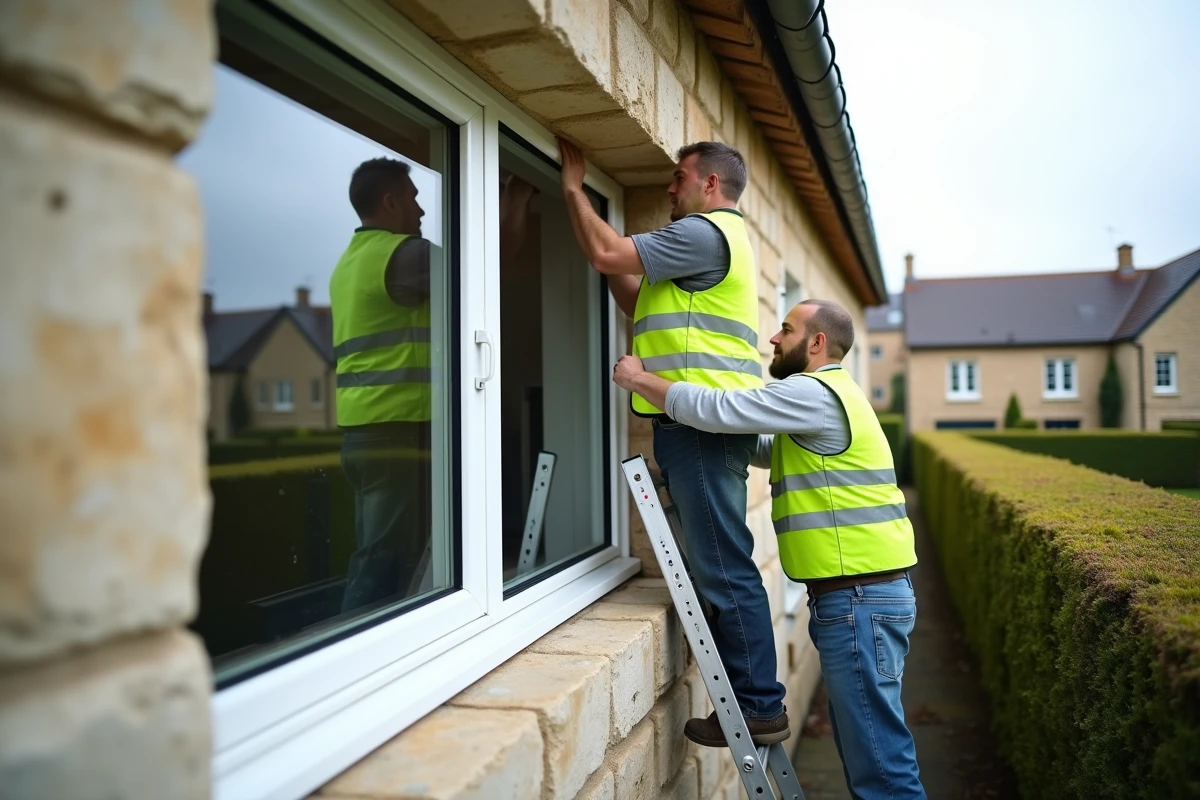
Co-ownership: double authorization and compliance with regulations
In co-ownership, the facade constitutes a common area. Modifying the windows requires authorization from the general assembly of co-owners, voted by the majority of Article 25 of the law of July 10, 1965. This authorization is in addition to the prior declaration at the town hall.
The co-ownership regulations often impose a uniform model, color, and type of glazing for the entire building. Installing windows different from the specifications exposes you to a restoration action initiated by the property manager or a co-owner.
Order of procedures to follow
We recommend submitting the project to the property manager and obtaining the vote in the general assembly before filing the prior declaration at the town hall. A refusal from the co-ownership after obtaining the urban planning authorization renders the project unfeasible, and the application fees are not refunded.
Dematerialization of urban planning declarations: state of play
For several years, most municipalities with more than 3,500 inhabitants have offered online submission of prior declarations via dedicated platforms. The portals vary from one community to another (business software, single window, intercommunal platform).
The dematerialized submission does not change the content of the file or the regulatory deadlines. The graphic documents (DP4, DP6) must be provided in PDF or high-resolution image format. A blurry or illegible file leads to the same request for additional documents as a poorly constituted paper file.
The electronic receipt is valid just like the stamped paper receipt. Keep it: it is proof of the submission date that triggers the processing time.